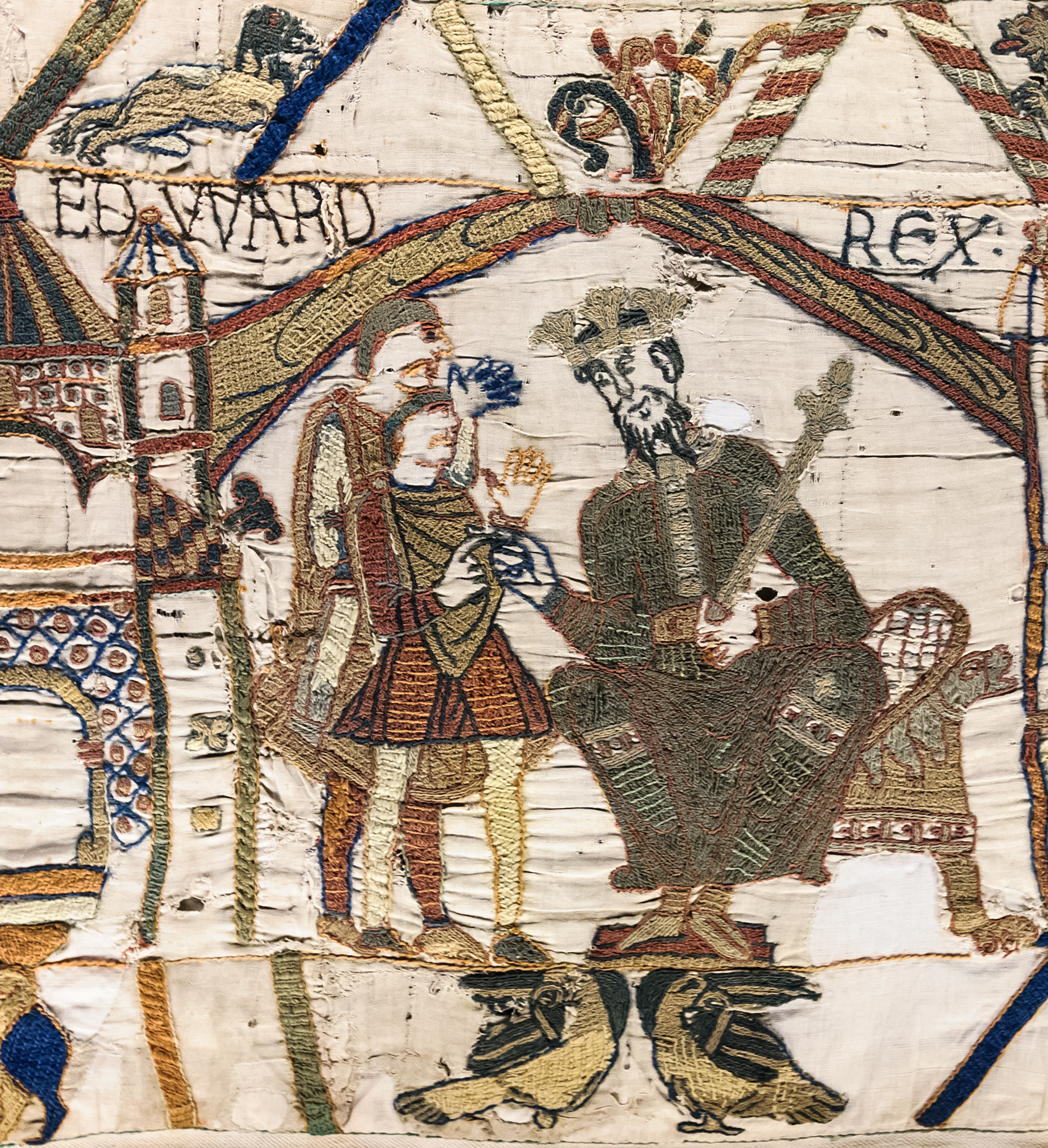
Nearly a thousand years after Norman craftsmen finished stitching its final scene, the Bayeux Tapestry crosses the Channel this week for the first time since it was made. The 70-metre embroidered chronicle of the 1066 Norman Conquest goes on public view at the British Museum on Thursday, in a loan its director has called one of the most significant cultural exchanges between Britain and France in living memory.
The nine-month exhibition, running to July 11, 2027, in the museum's Sainsbury Exhibitions Gallery, marks the first time the tapestry has left France since the Bishop of Bayeux commissioned it in the 1070s. French President Emmanuel Macron confirmed the loan during a 2025 state visit to London, framing it as a gesture of renewed warmth between the two countries after years of friction over Brexit and fishing rights. The tapestry remains the property of the French state, and the arrangement was made possible by a renovation of its permanent home, the Musée de la Tapisserie in Bayeux, which needed the artifact removed from its display case regardless of any loan.
A logistical operation a millennium in the making
Moving an object this fragile and this old required more than a year of preparation. French conservators spent months in 2025 rehearsing the tapestry's removal using a full-scale facsimile, testing how to lift, roll and transport the linen through Bayeux's narrow museum corridors and across the Channel without exposing it to vibration, humidity swings or light damage. The embroidery has hung vertically in Bayeux since 1842; for London, engineers designed a new horizontal mounting system that curators say will let visitors see the needlework at a shallower, more legible angle than they could in France.
British Museum director Nicholas Cullinan, who championed the loan, has framed it as a rare chance to bring one of the medieval world's most studied objects to a new audience. He has also likened public appetite for tickets to demand for a music festival, telling reporters the rush felt "like trying to get tickets to Glastonbury."
It is hard to overstate the significance of this extraordinary opportunity of displaying it at the British Museum, and we are profoundly grateful to everyone involved.
Nicholas Cullinan, Director, British Museum
Sold out through the year, a second wave to come
Demand has already outpaced supply. Every timed-entry slot from the September 10 opening through the end of December has sold out, according to the museum's ticketing office, with adult admission priced up to £33 at peak times and a £25 super-off-peak rate available on weekday late afternoons during school term. Under-16s are admitted free with a paying adult, and the museum has said a further batch of tickets, covering January through March 2027, goes on sale October 21. Museum officials have projected roughly 1 million visitors will pass through the gallery before the show closes next summer.
The tapestry depicts the events surrounding the Norman Conquest of England, from Harold Godwinson's disputed oath to William, Duke of Normandy, through the Battle of Hastings and William's coronation, rendered in wool thread on linen by embroiderers whose identities were never recorded. Historians still debate where it was made — Bayeux, Canterbury and Winchester have all been proposed as candidates — which gives the London display an added charge for scholars who have long argued the work has as much claim to an English audience as a French one.
For an object usually discussed in classrooms and academic journals, the exhibition has generated tabloid-level fervor on both sides of the Channel. French officials at the Bayeux museum have stressed that lending the tapestry does not diminish France's ownership or its eventual return, while British commentators have noted the symbolism of a nearly millennium-old account of a French-speaking conqueror's victory over the English being unveiled to record crowds in London.
The show will remain in place through next summer, after which the tapestry returns to Bayeux for reinstallation in its renovated museum, expected to reopen in 2027 with the new horizontal display technology developed for the London run already built in.