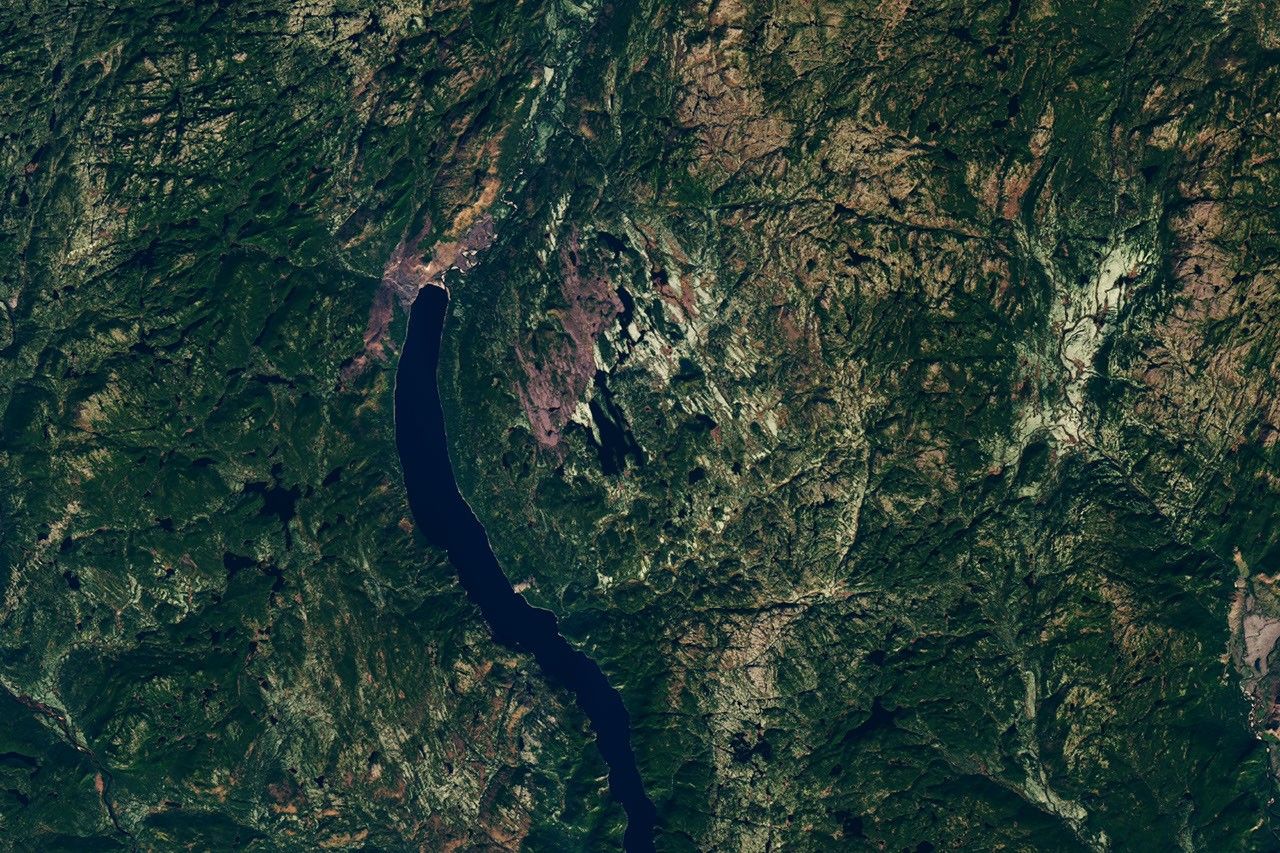
Joël Lapointe was planning a 2024 camping trip to Quebec's remote Côte-Nord region when he spotted something odd while scanning satellite maps near Lake Marsal: a vast, near-perfect circle etched into the landscape. The amateur astronomer contacted geologists in Europe and North America, and eighteen months later, scientists have confirmed his hunch — it is a 25-kilometer-wide impact crater, one of the largest found anywhere on Earth in nearly a decade.
The crater, formally named Uhackatik in consultation with the Innu council of Ekuanitshit, formed roughly 390 million years ago when an asteroid or comet struck what is now northeastern Canada, according to NASA's Earth Observatory. It is the largest confirmed impact structure discovered since the 31-kilometer Hiawatha crater beneath Greenland's ice sheet in 2018.
Shatter cones seal the case
Confirmation came in October 2025, when a four-person team led by Western University planetary geologist Gordon Osinski and French geophysicist Pierre Rochette reached the site by seaplane. They found shatter cones — distinctive fractured rock patterns that form only under the extreme pressures of a cosmic impact — in multiple outcrops, along with a central uplift and breccia consistent with a violent strike rather than volcanic activity. ScienceDaily reported the team first flagged the structure as a candidate impact site at a 2024 Meteoritical Society meeting before securing funding for the expedition.
Regional devastation on a scale that would wipe out major cities and have global climate impacts.
— Gordon Osinski, planetary geologist, Western University, on the scale of impact a similar strike would cause today
Scientists estimate roughly 200 impact structures have been confirmed on Earth, even though geologists believe hundreds more remain hidden beneath vegetation, water or sediment — evidence, researchers say, of how much of the planet's violent history is still waiting to be noticed by someone simply looking for a place to pitch a tent. A Meteoritical Society committee is expected to formally recognize Uhackatik at its next meeting, according to Smithsonian Magazine's account of the discovery.