The Royal Swedish Academy of Sciences on Tuesday awarded the 2026 Nobel Prize in Physics to Francis Halzen, a University of Wisconsin–Madison physicist who spent nearly four decades chasing an idea that most of his peers considered close to impossible: using a cubic kilometer of Antarctic ice to catch ghostly particles called neutrinos as they arrive from deep space.
The Nobel committee cited Halzen "for decisive contributions to the IceCube Neutrino Observatory and the discovery of high-energy neutrinos of astrophysical origin." He will share in the prize's 12 million Swedish kronor award, worth about $1.2 million.
A telescope built from ice
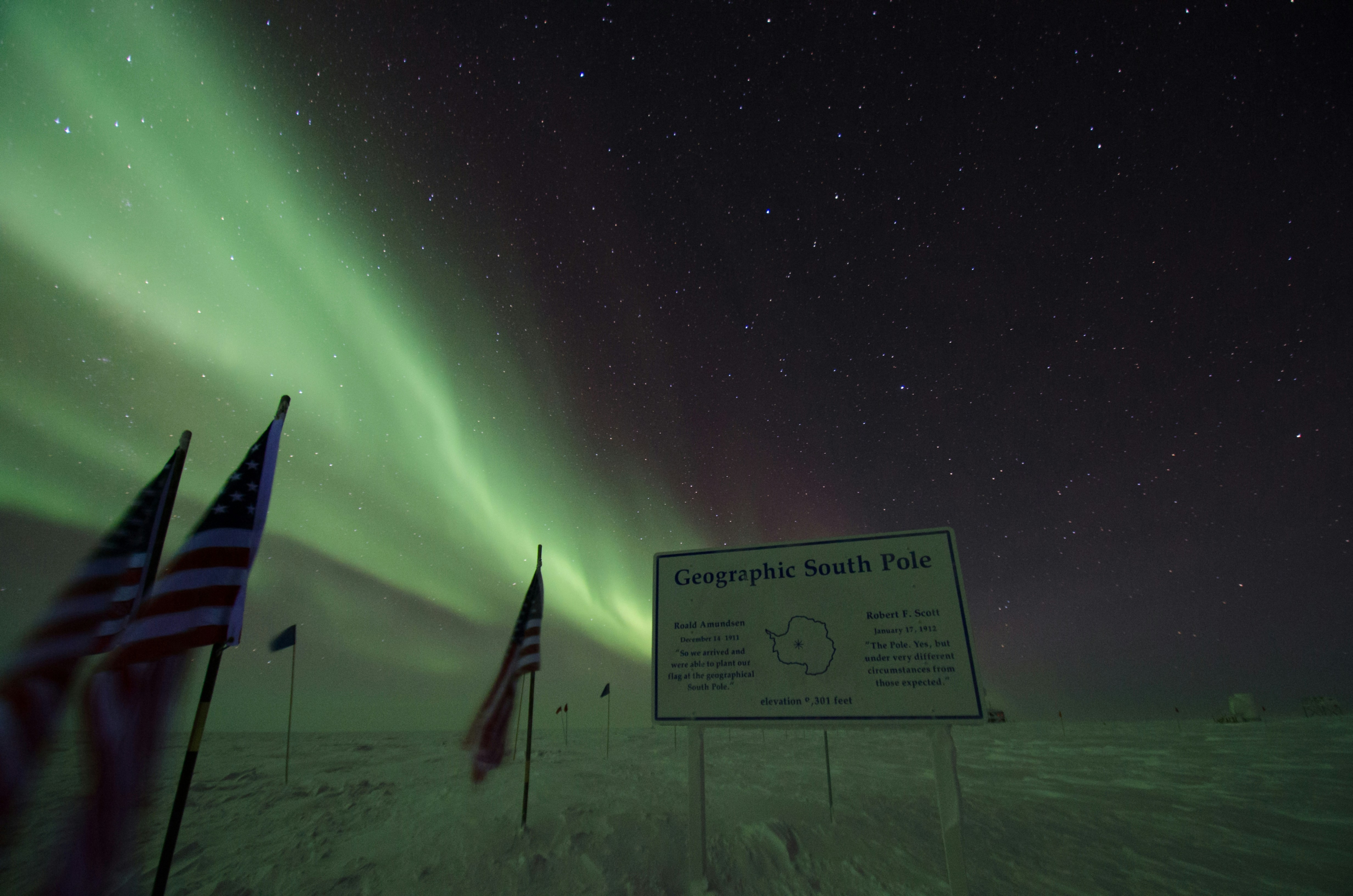
Halzen first proposed in 1988 that the thick, extraordinarily clear ice beneath the South Pole could double as a particle detector. When a neutrino collides with an atomic nucleus inside the ice, it produces a brief flash of light that sensors buried deep below the surface can register. The resulting instrument, the IceCube Neutrino Observatory, embeds 5,160 optical sensors across 86 cables sunk between 1,450 and 2,450 meters into the ice at the Amundsen–Scott South Pole Station. It was completed in 2010 at a cost of roughly $279 million, funded primarily by the U.S. National Science Foundation.
Neutrinos carry no electric charge and almost no mass, letting them travel for billions of light-years through planets, stars and galaxies essentially undisturbed — but that same property makes them maddeningly hard to catch. In 2013, Halzen's team announced that IceCube had recorded the first confirmed high-energy neutrinos originating from beyond the solar system, nicknamed "Bert" and "Ernie." The observatory has since traced individual neutrinos back to specific flaring galaxies and other extreme cosmic sources, work that effectively founded a new branch of astronomy built on particles instead of light.
Halzen has long summed up the appeal of the approach in simple terms: by studying neutrinos, "you could see things in the universe you couldn't see any other way." Unlike visible light, neutrinos pass straight through the dust and matter that can obscure the view of conventional telescopes, giving astronomers a direct line of sight into the cores of the most violent objects in the universe, including supermassive black holes and exploding stars.
IceCube's roughly 300 scientists and engineers, drawn from dozens of institutions worldwide, continue to operate and expand the detector; an upgrade known as IceCube-Gen2 is in the planning stages and would substantially increase its instrumented volume. Reaction to the announcement framed the prize as recognition not just of Halzen but of the generation of researchers who built and operate an observatory now considered central to "multi-messenger astronomy," in which telescopes, neutrino detectors and gravitational-wave observatories jointly study the same cosmic events.