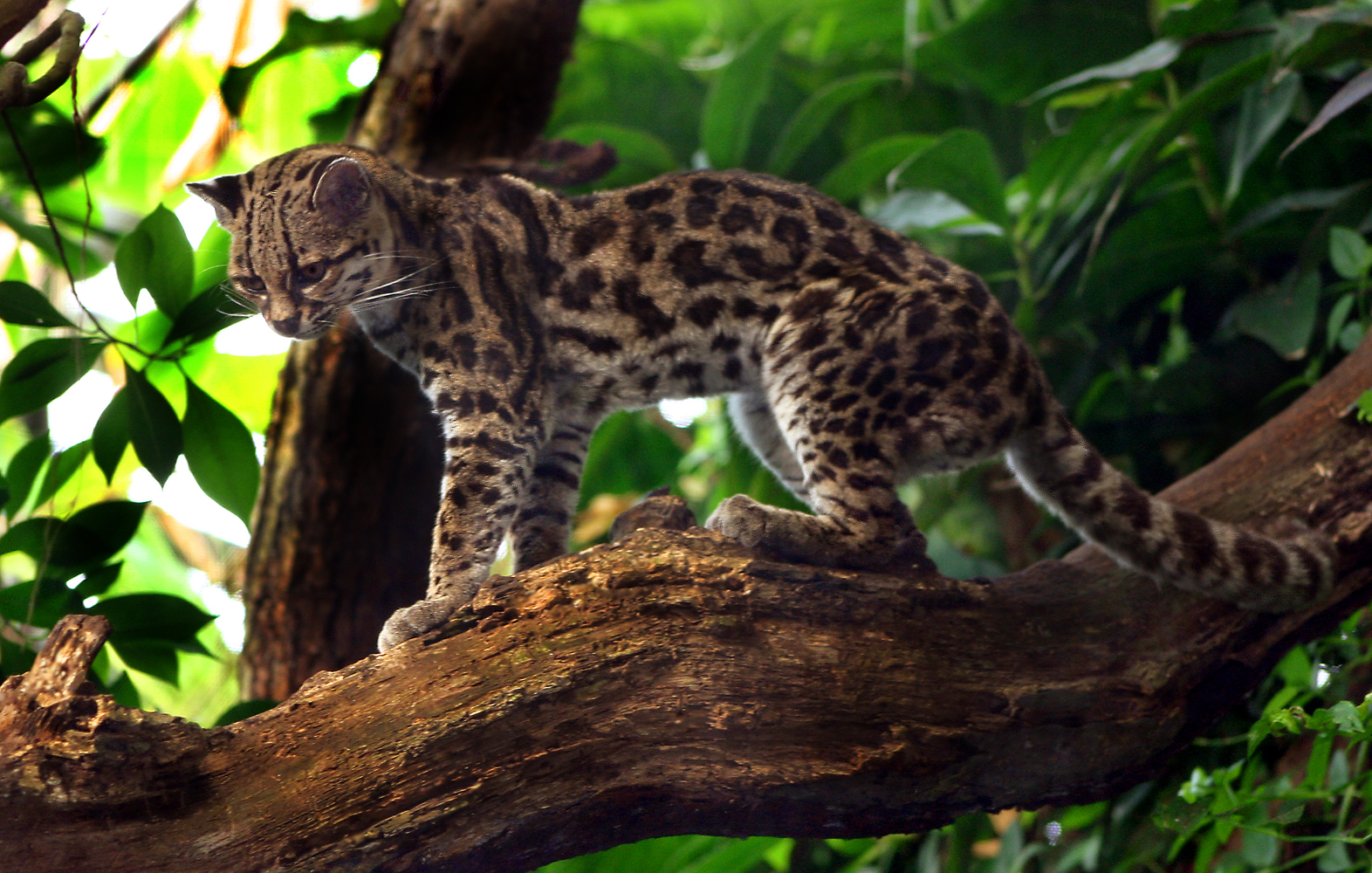
Researchers have formally described a new species of wild cat living in the cloud forests of Bolivia, the first time a living cat species has been named anywhere in more than 100 years. The animal, smaller than an average house cat and patterned like a tiny leopard, has been given the scientific name Leopardus tilcayo, borrowing the name used for it by local communities in the region.
The discovery, described this month in the journal Current Biology, grew out of what researchers call the most complete genetic study yet of South America's tiger cats, a loosely related group of small spotted felines found across much of the continent. The team, co-led by Paola Nogales-Ascarrunz and evolutionary ecologist Jonas Lescroart of the University of Antwerp, analyzed genomes from 38 cats, including eight museum specimens, and concluded that tiger cats actually represent five genetically distinct species rather than the two or three long assumed by scientists.
The tilcayo itself turned up almost by accident, after an animal that did not quite match known tiger cat species was brought to a wildlife sanctuary in Bolivia's Yungas cloud forest. Genetic testing eventually showed it had split off from its closest relative around 1.4 million years ago, long enough to count as its own branch on the cat family tree.
Describing a new cat species after more than 100 years shows how much we still have to learn.
Paola Nogales-Ascarrunz, co-lead author, on the discovery of Leopardus tilcayo
A shrinking habitat
The Yungas cloud forest, a narrow band of high-humidity mountain woodland running along Bolivia's eastern Andes, is considered one of the more threatened ecosystems in South America, squeezed by logging and farmland expansion. Conservationists say formally naming the tilcayo now gives it a fighting chance at legal protections that undescribed species cannot receive, since conservation status is typically assigned species by species.
Researchers involved in the project have said they expect the reclassification of tiger cats to ripple through zoo records, museum collections and conservation databases across several countries, as institutions work out which of their specimens actually belong to which of the five newly recognized species. For now, the tilcayo's full range and population size remain unknown, and field surveys aimed at answering those questions are expected to begin in the coming months.