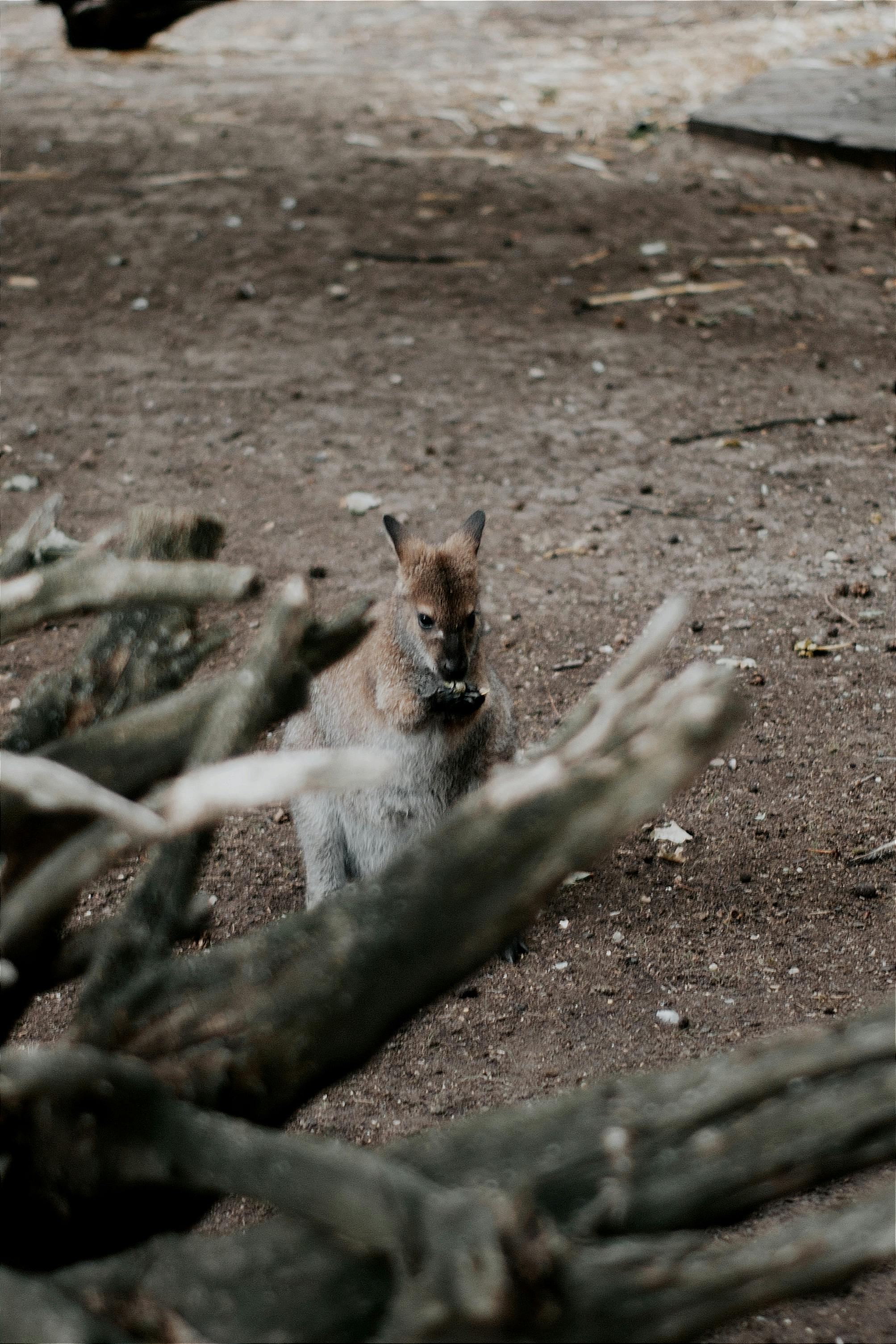
A wallaby smaller than a house cat has turned up in a stretch of Western Australia's Kimberley coast where nobody has confirmed one in half a century, giving conservationists a rare piece of good news about one of the country's most obscure threatened mammals.
The nabarlek, Australia's second-smallest rock-wallaby at around 1.2 kilograms and 36 centimetres long, was detected at two sites on Dambeemangaddee Country by the Australian Wildlife Conservancy, working with the Dambimangari Aboriginal Corporation. One population was found on the Yampi Sound Training Area, the first record for that site; a second, roughly 170 kilometres away in the northeast of Dambeemangaddee Country, marked the first mainland detection there since single museum specimens were collected in 1954 and 1972.
Field ecologists placed motion-triggered cameras across the rocky sandstone terrain the species prefers, then collected scat samples for DNA testing to rule out the nabarlek's near-identical cousins, the monjon and the short-eared rock-wallaby, which share the same rugged habitat and are difficult to tell apart from photographs alone. Only once the genetic results came back could researchers confirm which animal the cameras had actually captured.
It indicates that this threatened wallaby is persisting in places we didn't previously know about.
Larissa Potter, Australian Wildlife Conservancy
The nabarlek was once found across the far north of Australia but has all but vanished from the Northern Territory and is presumed locally extinct in the Victoria River district, where it has not been recorded in more than a century. The IUCN estimates there are between 5,000 and 10,000 mature individuals left, threatened chiefly by altered fire patterns that strip away the rocky shelter and vegetation it depends on, along with predation from feral cats.
For the Dambimangari rangers and traditional owners who helped guide the survey, the find carried a meaning beyond the species count. "It's good to know that they're there, it shows their Country is healthy," Dambimangari traditional owner Inga Pedersen said of the discovery.
The Australian Wildlife Conservancy says it now wants to search nearby habitat for additional populations and secure funding to study the newly confirmed groups' genetics, diet and breeding biology — research that could shape how fire and feral predators are managed across the wider Kimberley in the years ahead.