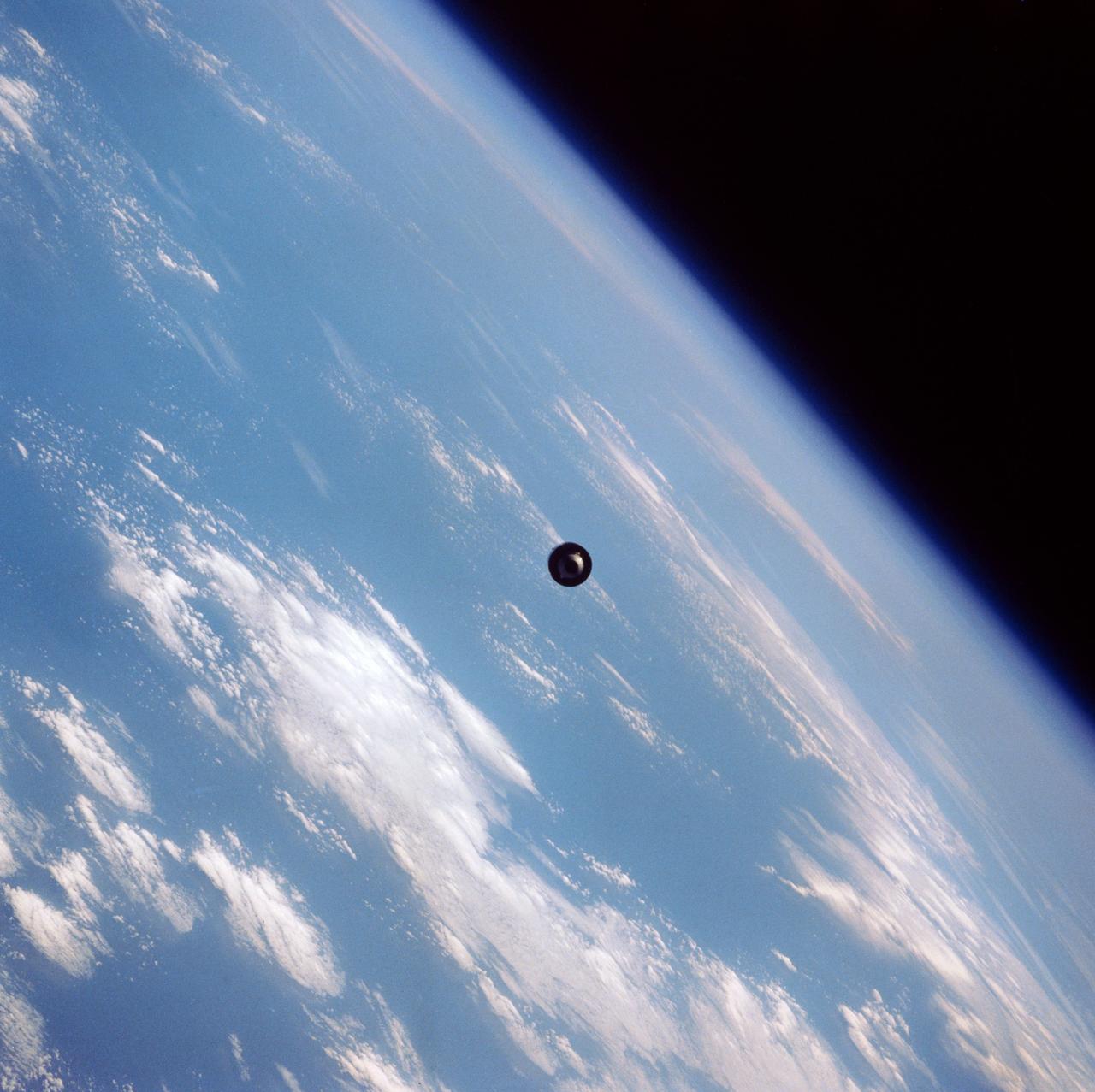
Google's first prototype space data center is up and running in orbit, and the company has already used it to ask an AI model to write a haiku about looking down at Earth.
The satellite, part of a project called Suncatcher, launched earlier this month alongside more than 100 other spacecraft on a SpaceX Falcon 9 rocket and spent roughly three weeks going through commissioning tests before engineers began sending it instructions this week. It carries four of Google's own Tensor Processing Units and can generate up to one kilowatt of electricity — though the power draw of running a TPU means the satellite can only switch one chip on for about 20 minutes at a stretch, Google told TechCrunch.
A Poem From Orbit
For its first real test, the ground team asked the satellite's preloaded model, Google DeepMind's Gemma, to write a haiku about being in space. It returned: "Blue marble below / Data streams in silent grace / Starlight feeds my core." Google also had the satellite report back on the orbital conditions around it; a spokesperson said it was operating normally.
The playful first prompt aside, the real purpose of the mission is to find out how the radiation and thermal swings of low Earth orbit affect Google's AI chips over time. The company has tested the TPUs extensively in particle accelerators on the ground, which suggested radiation-induced "bit flips" — corrupted values in computer memory that don't always trigger normal monitoring tools — would be a bigger risk for training models than for the lighter computational work of running them. The satellite will let Google check that assumption against real spaceflight conditions rather than a simulation.
If the current satellite performs well, Google plans to launch two more, more powerful satellites in 2027 that will test high-speed optical links between spacecraft — a feature Google says sets its approach apart from rivals. Unlike competitors such as Starcloud and Cowboy Space, which plan to run workloads on individual satellites, Suncatcher is designed around networks of satellites working together on the same task, which Google argues could eventually support far larger AI workloads than any single spacecraft could handle alone.
The long-term vision depends heavily on cheaper, more frequent heavy-lift rocket launches — both Google and SpaceX, in which Google's parent Alphabet holds a stake, are counting on SpaceX's Starship eventually flying often enough and cheaply enough to make orbital data centers practical at scale. For now, Suncatcher remains a single experimental satellite feeling out how a data center behaves when it's 300 miles overhead instead of in a warehouse.