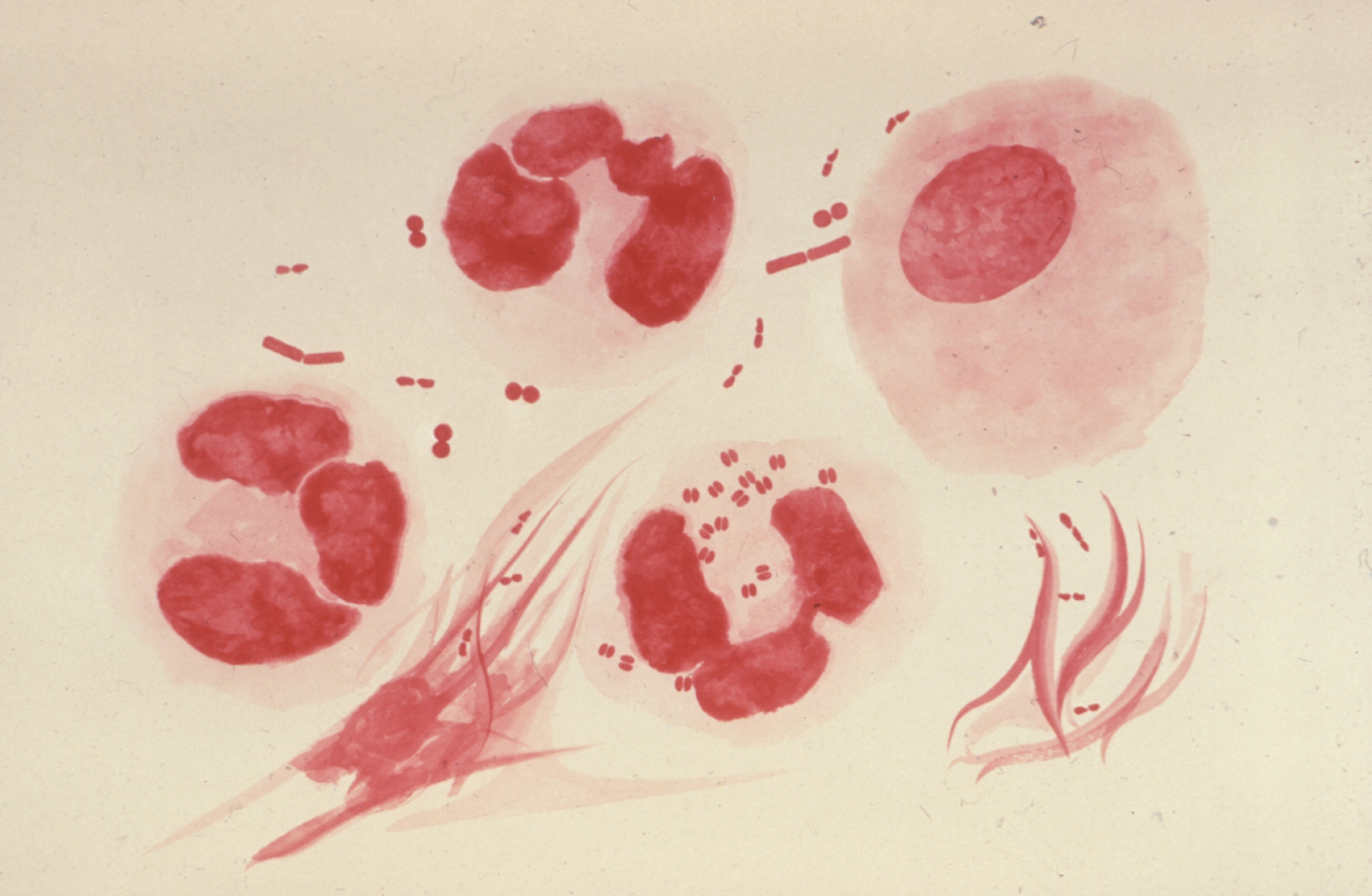
Researchers at MIT, the Broad Institute and Sweden's Karolinska Institutet have used a deep-learning model to identify a new antibiotic candidate that killed drug-resistant strains of the bacterium that causes gonorrhea in laboratory and animal tests, according to a study published in the journal Science Translational Medicine. The work is an early, preclinical step toward a new treatment, not a finished drug: it has not been tested in humans.
The team first tested roughly 38,650 small molecules in laboratory assays to see which inhibited the growth of Neisseria gonorrhoeae, then used that experimental data to train a deep-learning model to recognize the chemical patterns associated with antibacterial activity. They used the trained model to virtually screen a much larger library of about 6 million compounds, narrowing the field to 213 candidates for laboratory testing. After further screening for potency, selectivity and toxicity, two compounds stood out: one, known as MP20, reduced bacterial levels when tested against infection in a "vagina-on-a-chip," a microfluidic device lined with human tissue that mimics the vaginal environment; the other, known as A1, is an aminothiazole compound that inhibits alanine racemase, an enzyme the bacterium needs to build its cell wall — a mechanism distinct from that of antibiotics currently in clinical use — and reduced bacterial counts in a mouse infection model.
Why resistance is a growing worry
The research responds to a mounting public health problem. The World Health Organization has classified drug-resistant gonorrhea as an urgent global health threat, and resistance to the two antibiotics most commonly used against it has climbed quickly: resistance to ceftriaxone rose from roughly 0.8% to 5% of sampled cases between 2022 and 2024, while resistance to cefixime rose from about 1.7% to 11% over the same period, according to WHO surveillance data reported by multiple health outlets. Gonorrhea is one of the most common bacterial sexually transmitted infections worldwide, with the WHO estimating roughly 82 million new cases a year globally and the CDC estimating about 1.6 million new cases annually in the United States, many of them undiagnosed.
"This study builds on a body of work leveraging artificial intelligence to combat infectious diseases and brings that focus to N. gonorrhoeae," said James Collins, a professor at MIT and the study's senior author. Karolinska Institutet researcher Amir Ata Saei, who worked on confirming how the lead compound attacks the bacterium at the molecular level, said understanding that mechanism in detail "is crucial for their development and clinical translation."
Two other antibiotic candidates for gonorrhea, zoliflodacin and gepotidacin, are already further along, having shown encouraging results in human clinical trials, though neither has yet won regulatory approval. The newly identified compounds are considerably earlier in that pipeline.
The researchers say their next steps include refining the chemical structure of the lead compounds to improve their properties before any human testing can begin, a process that typically takes years. They also say the broader approach — training AI on existing drug data to search huge chemical libraries for new antibiotic candidates — could be applied to other drug-resistant pathogens with few treatment options left, an idea several outside microbiologists have described as a promising direction for antibiotic discovery more broadly.