Nearly 49 years after launch, NASA's Voyager 2 spacecraft has been granted at least one more year of scientific life, thanks to an engineering maneuver the mission team nicknamed the "Big Bang." The fix, detailed by NASA's Jet Propulsion Laboratory, buys time for the probe's three remaining science instruments as it continues drifting through interstellar space more than 12 billion miles from Earth.
Voyager 2 and its twin, Voyager 1, run on radioisotope thermoelectric generators that convert heat from decaying plutonium into electricity. That power source shrinks by about 4 watts every year as the plutonium decays, a slow squeeze that has forced engineers to shut down instruments one by one to keep the spacecraft's remaining systems warm enough to function. Two instruments on Voyager 2 had already been switched off since 2024, and without intervention, another was on track to go dark before the end of 2026.
The "Big Bang" maneuver avoided that outcome by simultaneously powering down select onboard devices and swapping in lower-power alternatives, while keeping the spacecraft's temperature within safe operating limits — a delicate balancing act given the ship's distance and the decades-old hardware involved. The result, according to NASA Science's mission update, is enough freed-up power to keep Voyager 2's three surviving instruments — including its magnetometer and plasma wave subsystem — running for at least an extra year.
A twin still to come
Engineers now plan to attempt the same power swap on Voyager 1, which is even farther from Earth, at roughly 15 billion miles out. "The mission team plans to perform the same swap on Voyager 1, which is farther from Earth than Voyager 2, and to complete the effort in the coming months," NASA Science reported. If successful, the maneuver would similarly extend the elder probe's dwindling instrument set.
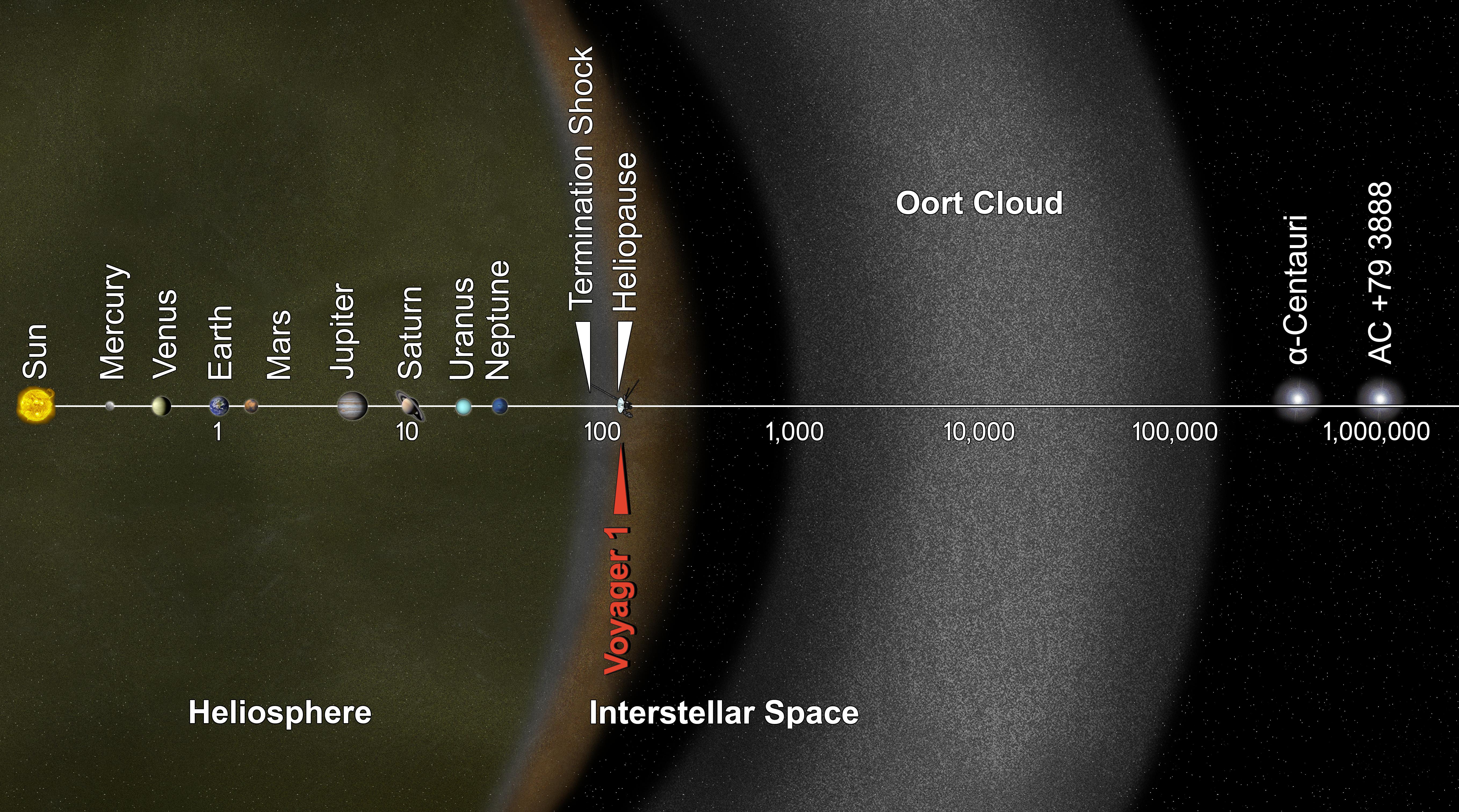
Both spacecraft, launched in 1977, have long outlived their original four-year planned missions to Jupiter and Saturn. Voyager 2 remains the only spacecraft to have ever flown past Uranus and Neptune, and both probes exited the heliosphere into interstellar space years ago — Voyager 1 in 2012 and Voyager 2 in 2018 — making them the only human-made objects operating outside the Sun's direct influence. Mission engineers have said that with careful power management, one instrument on each spacecraft could plausibly keep transmitting data into the 2030s, though the generators' steady decline means an eventual full shutdown is inevitable.
For now, the "Big Bang" buys the mission team something increasingly precious: time. Every extra year of instrument operation means more real-time measurements of the plasma, magnetic fields and cosmic rays that fill the space between stars — data no other active mission can currently collect from so far outside our solar system.