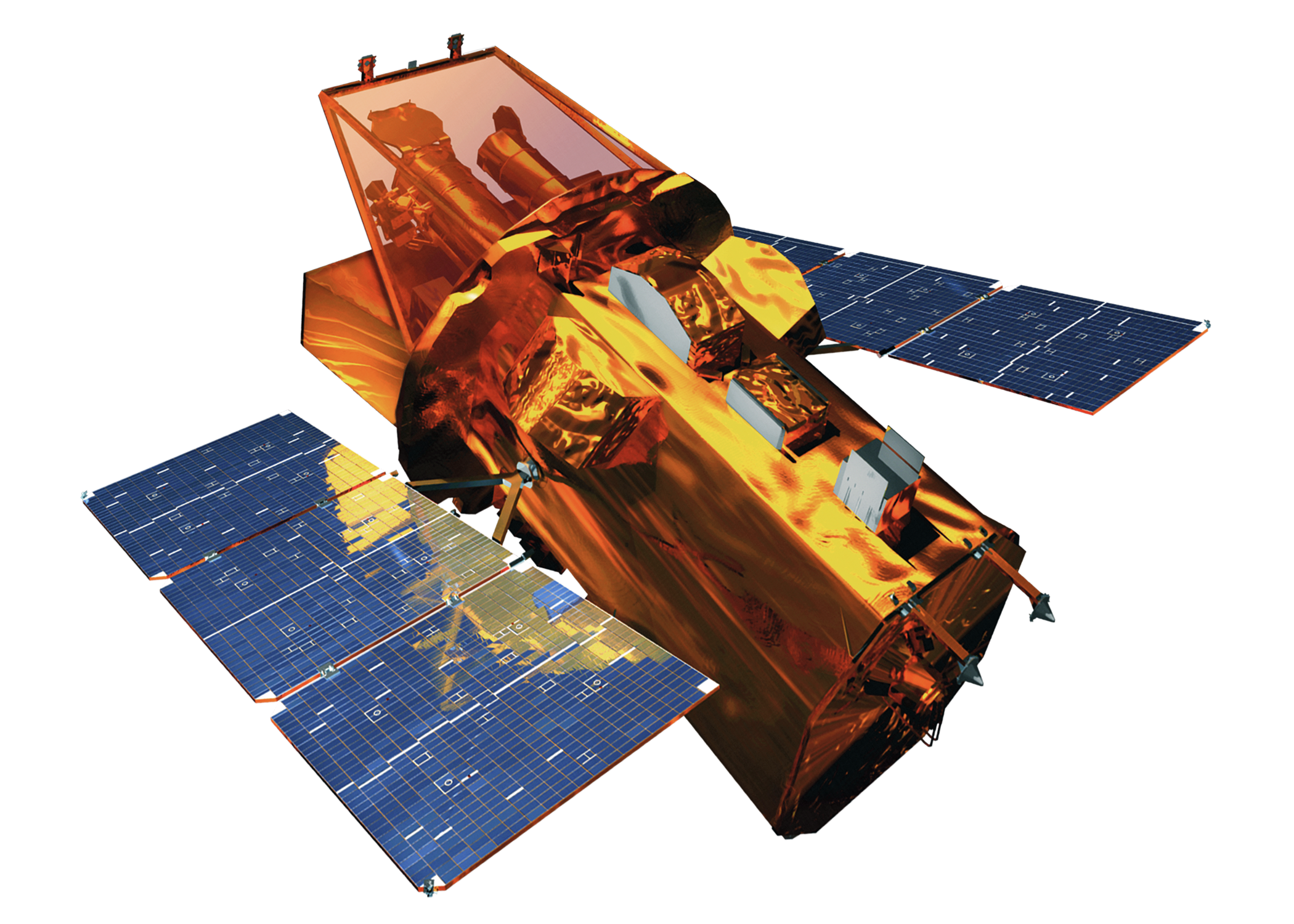
NASA's Neil Gehrels Swift Observatory made an uncontrolled reentry into Earth's atmosphere early Friday, ending a mission that ran nearly 22 years — more than ten times its planned two-year lifespan. The US Space Force's tracking network placed the reentry at about 7:39 a.m. EST over North Sumatra, Indonesia, near 3.4 degrees north latitude and 98.6 degrees east longitude.
Launched in November 2004, Swift carried three instruments tuned to different wavelengths of light — gamma rays, X-rays and ultraviolet/optical — that together let astronomers catch and study gamma-ray bursts, the brief, violent flashes released when massive stars collapse or when dense stellar remnants like neutron stars collide. When its burst-alert telescope spotted a flash, Swift could swing its other instruments onto the same patch of sky within roughly a minute and push word out to ground- and space-based observatories worldwide, letting scientists study fast-fading afterglows they would otherwise miss.
A fading orbit, a failed rescue
NASA shut down Swift's science operations on Oct. 20 as its orbit decayed faster than expected, and a bid by the commercial servicing company Katalyst to reach and stabilize the aging spacecraft did not succeed in time. NASA had put the odds of surviving debris striking a populated area at roughly 1 in 2,100, within the agency's standard safety threshold for an uncontrolled reentry, and the satellite-tracking firm LeoLabs separately judged the chance of debris causing injury or significant property damage to be very small. Most of the 3,200-pound spacecraft was expected to burn up on the way down; NASA had flagged a handful of denser components, including tungsten shielding and mirror fragments, as the parts most likely to reach the surface intact. The reentry corridor spanned parts of Africa, Australia, India, Southeast Asia and Central and South America, and any surviving debris most likely came down in open ocean near the confirmed overflight point.
Beyond gamma-ray bursts, Swift's wide field of view and rapid-response observing made it a workhorse for tracking flare stars, supernovae, outbursts from supermassive black holes at the centers of active galaxies, and comets and asteroids passing through the solar system. It was renamed in 2018 in honor of Neil Gehrels, the mission's longtime principal investigator, who died in 2017.
NASA has not announced a successor with Swift's specific combination of rapid repointing and simultaneous multi-wavelength coverage, leaving a gap in round-the-clock gamma-ray-burst alerts. Other observatories, including the Fermi Gamma-ray Space Telescope, will keep detecting bursts, but without the fast, automated follow-up across X-ray and optical wavelengths that made Swift's 22-year run so productive.